
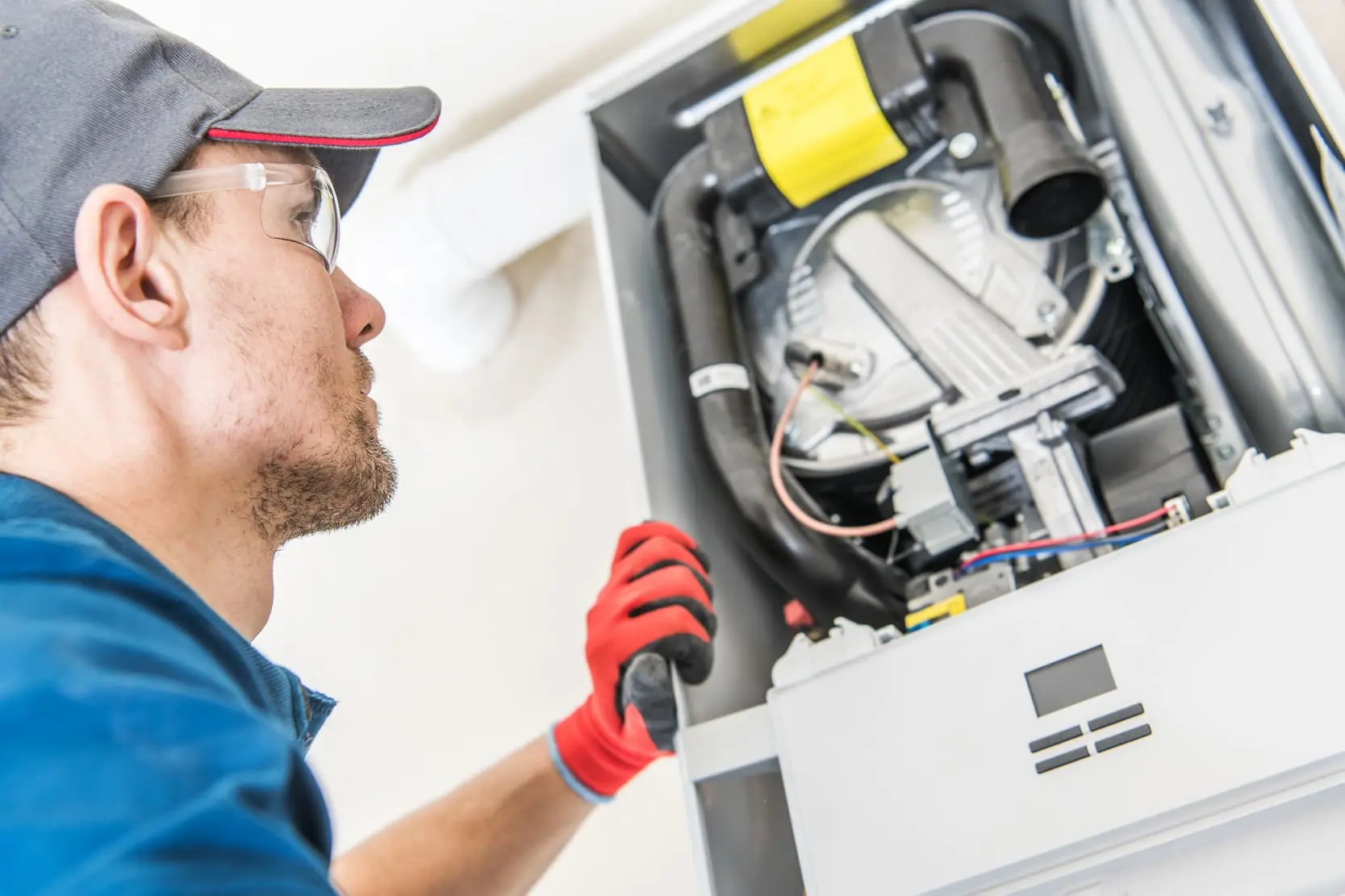
Why Your AC Is Running but Not Cooling: A Homeowner’s Guide
March 14, 2026 By: One Way Heating & Cooling
It is a scenario every El Paso homeowner dreads: the sun is blazing, you hear your air conditioner humming along, but the air coming out of your vents feels like a lukewarm breeze. When your AC is running but not cooling, it’s not just an inconvenience—it’s a sign that your system is struggling.
In the intense Texas heat, an air conditioner that can’t keep up is more than a comfort issue; it can lead to massive energy bills and even permanent system damage. Understanding why this happens is the first step toward restoring your home’s comfort.
At One Way Heating and Cooling, we have seen it all over our 40 years of service. From simple DIY fixes to complex mechanical failures, here is everything you need to know about an AC that won't blow cold.
Is your thermostat set to the right mode?
Before you assume the worst, always check the simplest component first: the thermostat. It is the control center for your entire HVAC system, and a small setting error can lead to big confusion.
The "On" vs. "Auto" Trap: If your fan is set to "On," the blower will run constantly, even when the cooling cycle is off. This means you will feel air moving, but it won’t be refrigerated. Switching to "Auto" ensures the fan only blows when the air is actually being cooled.
Mode Settings: Ensure the system is actually set to "Cool." It sounds simple, but during seasonal transitions, it’s easy to leave the system in "Heat" or "Off" mode.
Power Issues: If the screen is blank or flickering, your batteries might be dead. A thermostat with low power may not be able to signal the outdoor unit to kick on, even if the indoor fan is running.
Could a dirty air filter be the culprit?
A clogged air filter is the number one cause of cooling issues. Your AC works by pulling warm air from your home, cooling it over a set of coils, and pushing it back out. If the filter is caked with dust, pet hair, or El Paso desert sand, the system can't "breathe."
When airflow is restricted, several things happen:
The system runs longer to try and reach the target temperature.
The lack of warm air causes the internal coils to get too cold.
The moisture on the coils freezes, turning your AC into a literal block of ice.
We recommend checking your filter every month and replacing it at least every 90 days—or more often if you have pets.
Is the outdoor condenser unit blocked or dirty?
The outdoor portion of your AC, known as the condenser, has a very specific job: it takes the heat collected from inside your home and releases it into the outside air. If the unit is smothered, it can’t get rid of that heat.
Common blockages include:
Overgrown bushes or tall grass.
Leaves, twigs, and debris stuck in the metal fins.
A "blanket" of dust and dirt on the coils.
If the condenser can't breathe, the heat stays trapped in your system, and the air inside your home stays warm. You can safely clear away plants and debris to ensure there is at least two feet of clear space around the unit.
Are your evaporator coils frozen?
If you see ice forming on the copper lines leading to your unit or on the indoor unit itself, you have a frozen evaporator coil. While it might seem like "extra cold" is a good thing, ice acts as an insulator. It prevents the refrigerant inside the coils from absorbing any heat from your home's air.
If you suspect your coils are frozen:
Turn the AC off immediately at the thermostat.
Switch the fan setting to "On" to help circulate air and melt the ice.
Do not turn the cooling back on until the ice has completely melted.
Call a professional to find out why it froze, as this is usually caused by low refrigerant or restricted airflow.
Does your system have a refrigerant leak?
Refrigerant is the lifeblood of your air conditioner. Your AC uses a closed loop of refrigerant that should stay at the same level for the life of the system. If your levels are low, it means you have a leak.
Signs of a refrigerant leak include:
A faint hissing or bubbling sound near the AC unit.
Ice buildup on the refrigerant lines.
High utility bills despite the house staying warm.
Air that feels "slow" or humid.
Handling refrigerant requires specialized tools and EPA certification. If you suspect a leak, you must contact a licensed technician to locate the hole, repair it, and "recharge" the system to the correct level.
Is the compressor failing?
The compressor is the heart of your outdoor unit. Its job is to circulate the refrigerant between the indoor and outdoor coils. If the compressor fails, the refrigerant stays still, and no cooling takes place.
Compressor issues are often caused by:
Electrical Failures: Burnt-out capacitors or damaged wiring can prevent the compressor from starting.
Pests: In El Paso, rodents or insects can crawl into the outdoor unit and fry the control board or chew through wires.
Age: Over time, mechanical parts simply wear out.
If you hear a loud banging, clicking, or shrieking noise coming from your outdoor unit, turn it off and call for a repair immediately to prevent further damage.
Are leaky ducts wasting your cold air?
Sometimes your AC is actually doing its job perfectly, but the cold air never reaches your living room. Your ductwork is the delivery system for your home. If there are holes, gaps, or disconnected sections in the attic or crawlspace, you are essentially paying to cool your attic.
Leaky ducts can account for up to 30% of energy loss in a typical home. If some rooms feel ice-cold while others stay warm, it is a strong indicator that your ductwork needs professional sealing or repair.
Is your AC unit the wrong size for your home?
If your system runs constantly but the temperature never drops, it might be undersized. This often happens if you have added on to your home or if the original builder installed a unit that was too small to save on costs.
Conversely, a unit that is too large will "short cycle," turning on and off rapidly. This prevents the system from properly dehumidifying your home, leaving you feeling clammy and uncomfortable. A professional load calculation by One Way Heating and Cooling can determine if your unit is the right fit for your square footage and the El Paso climate.
Why choose One Way Heating and Cooling for your repair?
Dealing with a broken AC in the middle of a heatwave is stressful. You need a team that is fast, reliable, and experienced. One Way Heating and Cooling has been the trusted name in El Paso for over four decades.
We offer:
Expert Diagnostics: We don't just fix the symptom; we find the root cause.
Comprehensive Service: From refrigerant leaks to circuit board replacements, we handle it all.
Local Knowledge: We understand how the Texas heat and local pests affect your HVAC system.
Financing Options: We believe everyone deserves a cool home, which is why we offer flexible payment plans.
Don't suffer in the heat! If your AC is running but not cooling, contact One Way Heating and Cooling today.
Frequently Asked Questions (FAQ)
Q: Can I just add more refrigerant myself?
A: No. Refrigerant is a hazardous substance that requires EPA certification to handle. Furthermore, if your AC is low on refrigerant, it means there is a leak that must be repaired first. Adding more without fixing the leak is a temporary and expensive waste of money.
Q: How often should I change my air filters in El Paso?
A: Because of the high amount of dust and wind in our region, we recommend checking your filters every month. If you have pets or allergies, a fresh filter every 30 to 60 days is ideal to keep your AC running efficiently.
Q: Why is my AC blowing warm air but the fan is spinning?
A: This usually means your indoor blower is working, but the cooling cycle has failed. This could be due to a tripped breaker for the outdoor unit, a failed capacitor, or a refrigerant leak.
Q: Is it okay to keep running my AC if it isn't cooling?
A: No. If your AC is running but not cooling, the system is likely under extreme stress. Continuing to run it can cause the compressor to overheat or the motor to burn out, leading to much more expensive repairs.
Q: How long should a typical AC unit last?
A: With proper maintenance, most residential AC units last between 15 and 20 years. However, the extreme heat in El Paso can shorten that lifespan if the system isn't regularly serviced.