
AC Water Leaks: What Homeowners Should Do
April 03, 2026 By: One Way Heating & Cooling
Finding a puddle of water around your indoor AC unit is enough to make any homeowner break into a sweat—especially during a Texas summer. While a little condensation is a normal part of how your air conditioner works, standing water or a steady drip is a sign that something is wrong.
If you ignore a leak, you aren't just risking a humid house; you’re looking at potential floor damage, mold growth, and expensive system repairs. This guide will walk you through exactly what to do when you spot a leak and how to keep your home dry.
Why is my AC leaking water inside the house?
The most common reason for an AC water leak is a clogged condensate drain line. As your AC cools your home, it removes moisture from the air. That moisture drips into a pan and travels through a PVC pipe to the outside. Over time, algae, mold, and dust can create a "slug" of gunk that blocks the pipe.
When the water has nowhere to go, it backs up and overflows the drain pan. Other common culprits include:
A Cracked Drain Pan: In older units, metal pans can rust through, while plastic ones can crack.
Dirty Air Filters: If your filter is clogged, air can't flow over the evaporator coils. This causes the coils to get too cold and freeze over. When that ice melts, it creates more water than the pan can handle.
Low Refrigerant: Just like a dirty filter, low refrigerant levels cause the coils to freeze, leading to a watery mess once the system cycles off.
What should I do immediately when I find a leak?
The very first thing you should do is turn off the thermostat.
Switch to "Off": Stop the cooling cycle immediately to prevent more condensation from forming.
Clear the Water: Use a wet/dry vacuum or old towels to soak up the standing water. This prevents damage to your flooring or drywall.
Check the Filter: Pull out your air filter. If it looks like a thick wool blanket of dust, replace it immediately.
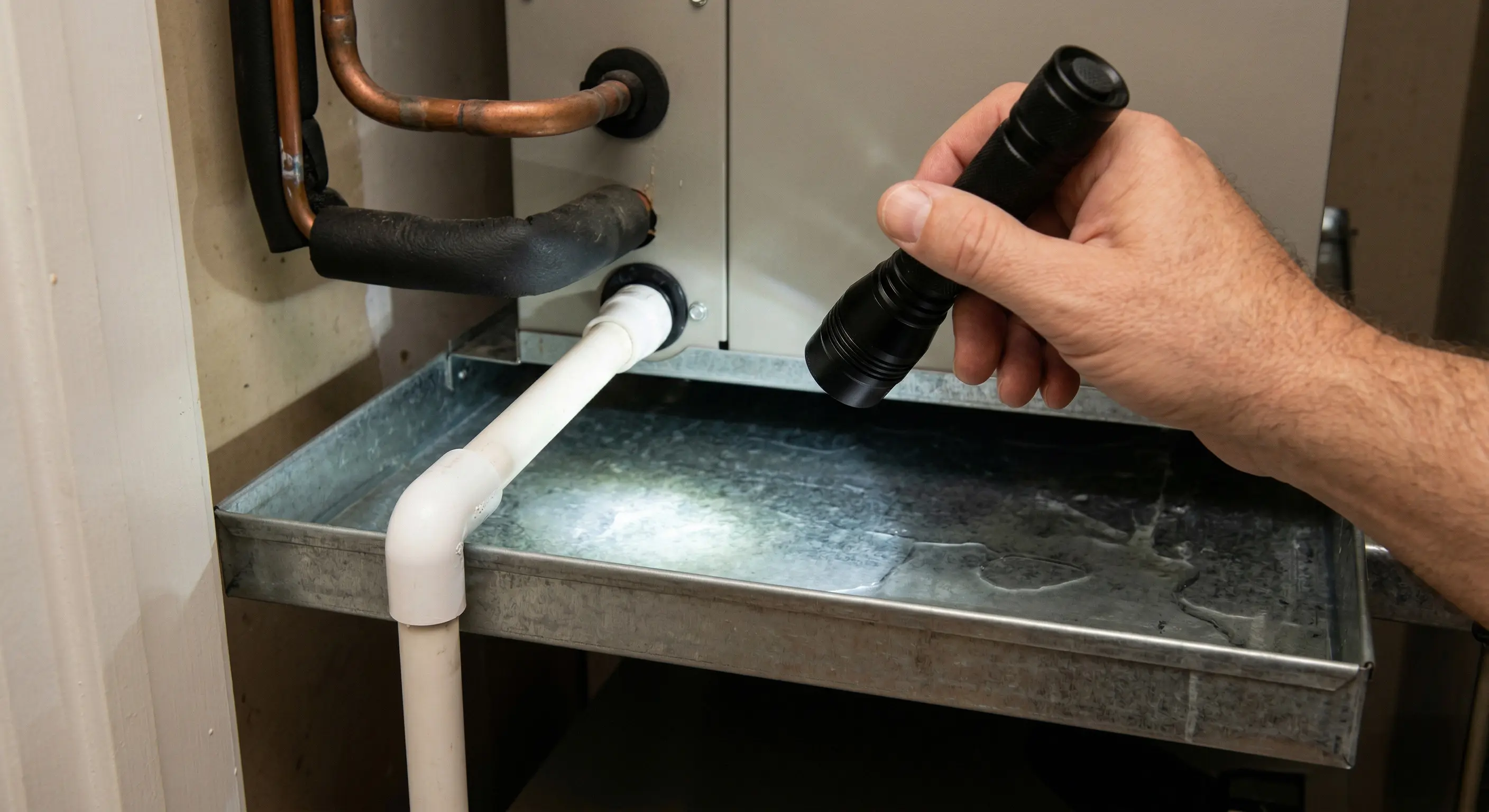
Inspect the Pan: Use a flashlight to look at the drain pan under the indoor unit. If it’s full of water, the blockage is likely in the drain line.
How can I clear a clogged AC drain line myself?
If you are handy, you can often clear a minor clog without calling a technician.
Locate the PVC Access Point: Most systems have a T-shaped pipe near the indoor unit.
The Vacuum Method: Go outside to where the drain line exits your house. Use a wet/dry vac to create a seal around the pipe and suck out any debris for about 30 seconds.
The Vinegar Flush: Pour about 1/4 cup of distilled white vinegar into the drain line access point. The acidity helps kill algae and prevent future clogs.
Is a leaking air conditioner dangerous?
While a water leak isn't usually an "explosive" emergency, it carries significant risks if left unaddressed.
Electrical Hazards: If water leaks onto electrical components or near your home’s wiring, it can cause shorts or even fires.
Structural Damage: Water can seep into floorboards, subflooring, and drywall, leading to thousands of dollars in restoration costs.
Mold and Mildew: Damp environments around your HVAC system are breeding grounds for mold, which can eventually enter your ductwork and affect your family's health.
When is it time to call a professional for AC repair?
If you’ve changed the filter and tried to clear the drain line but the water keeps coming, it’s time to call the experts at One Way Heating and Cooling. You should definitely call a pro if:
The Coils are Frozen: If you see ice on the copper lines or the indoor coils, do not try to scrape it off. You likely have a refrigerant leak or a motor issue.
The Pump is Broken: If your system uses a condensate pump and it isn’t humming or moving water, it likely needs replacement.
The Leak is Hidden: If you see water spots on your ceiling or walls but the unit looks dry, the leak could be inside your ductwork or behind a wall.
How can I prevent AC water leaks in the future?
The best way to handle a leak is to make sure it never happens.
Monthly Filter Changes: This is the simplest and cheapest way to keep your system running smoothly.
Annual Maintenance: A professional tune-up includes cleaning the coils and flushing the drain line before the summer heat hits.
Install a Float Switch: Ask your technician about a "safety float switch." This device automatically shuts off your AC if it detects water backing up in the pan, saving you from a flood.
Conclusion
A leaking AC is a cry for help from your HVAC system. While a clogged pipe or a dirty filter can often be handled with a little DIY effort, recurring leaks or frozen coils require professional attention to avoid permanent damage. By staying proactive with your maintenance and acting fast when you spot water, you can keep your home cool and dry all summer long.
If you’re dealing with a stubborn leak or want to schedule a preventative tune-up, contact One Way Heating and Cooling today. Our team of experts is ready to get your system back in top shape!
Frequently Asked Questions (FAQ)
Q: Can I run my AC while it’s leaking?
A: No, you should turn it off immediately. Running a leaking AC can lead to electrical damage, internal freezing, and significant water damage to your home.
Q: Why is my AC leaking water when it is turned off?
A: This usually happens if your evaporator coils were frozen while the system was running. Once you turn it off, the ice begins to melt, and the resulting water overflows the drain system.
Q: How much does it cost to fix an AC water leak?
A: The cost varies depending on the cause. A simple drain line flush is relatively inexpensive, while replacing a cracked evaporator coil or fixing a refrigerant leak can be more significant. One Way Heating and Cooling provides transparent pricing after a thorough inspection.
Q: How often should I clean my AC drain line?
A: We recommend flushing your drain line with vinegar every 3–6 months to prevent algae buildup, especially during the high-use summer months.