
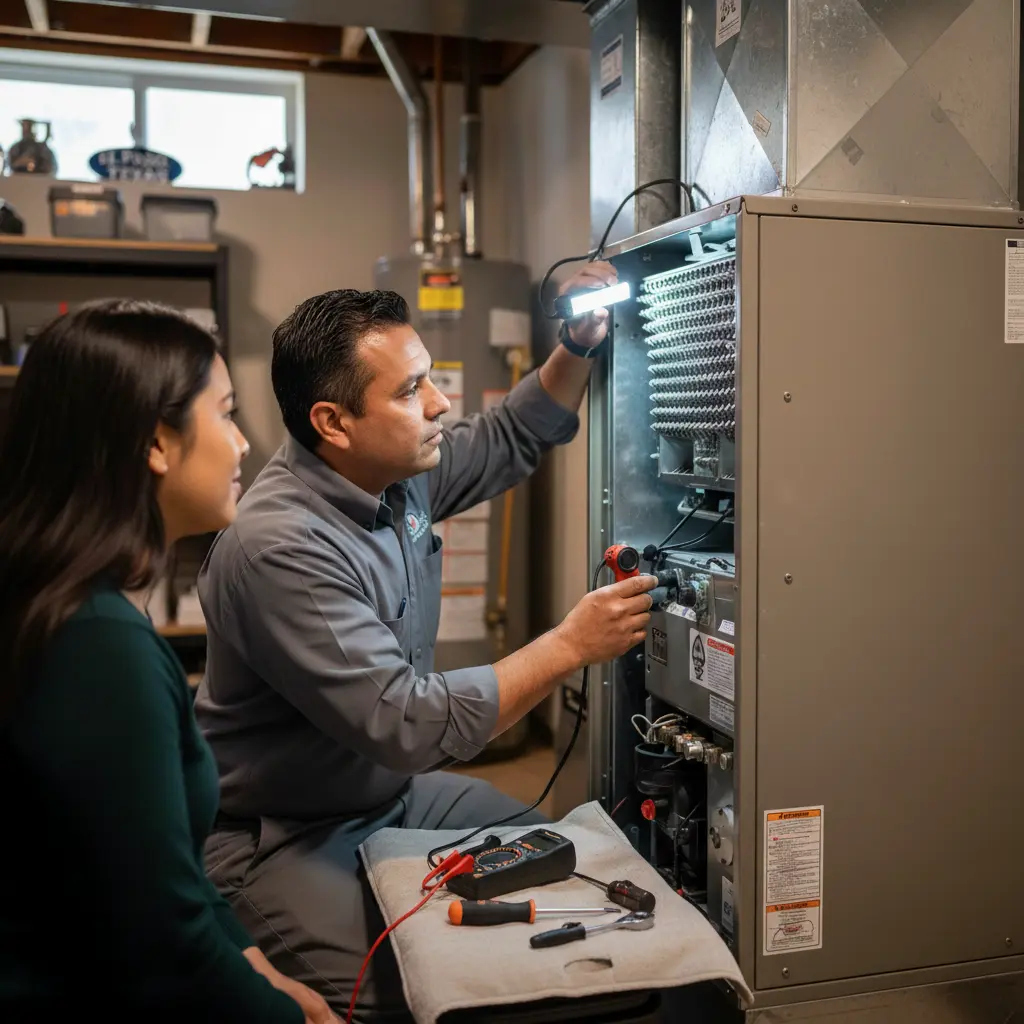
What Is the Life Expectancy of a Furnace?
January 15, 2026 By: One Way Heating & Cooling
When the desert sun sets and the El Paso winter chill creeps into your home, your furnace becomes the most important appliance you own. But like any mechanical system, it won't last forever. If you are starting to hear strange rattles or noticing that your energy bills are creeping up, you’re likely asking: "How much time does my furnace have left?"
Understanding the life expectancy of your furnace helps you plan for the future, avoid emergency breakdowns in the middle of a cold snap, and ensure your family stays safe. At One Way Heating and Cooling, we believe an informed homeowner is a comfortable homeowner.
In this comprehensive guide, we’ll break down exactly how long different types of furnaces last, the factors that cut their lives short, and the simple steps you can take to keep yours running for decades.
TL;DR: How Long Will Your Furnace Last?
A standard furnace in El Paso typically lasts between 15 and 20 years, though electric models can sometimes reach 30. However, its actual lifespan depends entirely on regular maintenance, clean filters, and professional installation. If your unit is over 15 years old, making strange noises, or causing your energy bills to skyrocket, it’s likely nearing the end of its road. Taking action now can prevent a total heating failure during a winter cold snap.
Average Lifespan: 15–20 years (Gas), 20–30 years (Electric).
Key to Longevity: Annual tune-ups and monthly filter changes.
Warning Signs: Uneven heating, frequent repairs, and rising costs.
Don’t Get Left in the Cold!
Is your furnace acting up or reaching the 15-year mark? Ensure your home stays warm and safe with a professional inspection from the local experts.
Contact One Way Heating and Cooling today or call us at (915) 525-5737 to schedule your maintenance or get a free estimate on a high-efficiency replacement!
What is the average life expectancy of a furnace?
On average, a modern furnace will last between 15 and 20 years. However, this number can vary significantly based on the fuel source your system uses. Because different systems use different technology to generate heat, some are naturally more durable than others.
Gas Furnaces: These are the most common in El Paso and typically last 15 to 20 years. The heat exchanger is usually the first major part to fail.
Electric Furnaces: Because they have fewer moving parts and no combustion process, these can often last 20 to 30 years. However, they are often more expensive to operate month-to-month.
Heat Pumps: Since heat pumps work year-round for both heating and cooling, they have a shorter lifespan of roughly 10 to 15 years.
Oil Furnaces: While less common in our region, these sturdy units can last 20 to 25 years if the fuel tank and lines are meticulously maintained.
Which factors impact how long a furnace lasts?
The "average" lifespan is just a baseline. Several real-world factors determine whether your furnace hits the 15-year mark or makes it all the way to 25.
Maintenance History: This is the single most important factor. A furnace that is professionally cleaned and inspected every year will almost always outlast a neglected unit.
Installation Quality: If a furnace is too big or too small for your home, it will "cycle" incorrectly. This puts massive amounts of stress on the motor and heat exchanger.
Filter Cleanliness: A dirty filter restricts airflow. This forces the furnace to run hotter and longer to achieve the same temperature, wearing out the internal components.
Thermostat Habits: Turning your heat up to 80 degrees to "warm the house faster" (which doesn't actually work) just makes the system work harder than it was designed to.
Climate and Usage: In El Paso, we don't use our heaters as much as people in the North, but our dusty environment means filters clog faster and internal components can get coated in grit.
What are the warning signs of a failing furnace?
You don’t want to wait for your furnace to stop working entirely before you start looking for a replacement. Usually, a system will give you several "warning shots" that its life expectancy is coming to an end.
Frequent Repairs: If you have called a technician more than twice in the last two years, the "repair vs. replace" math is likely leaning toward a new unit.
Rising Energy Bills: As components wear out, the furnace has to run longer to produce the same amount of heat, causing your gas or electric bill to spike.
Strange Noises: Banging, screeching, or rattling sounds often indicate a failing blower motor or a cracked belt.
Uneven Heating: If the living room is a sauna but the bedrooms are freezing, your furnace may no longer have the "push" needed to circulate air properly.
Soot or Dust: Finding black soot or excessive dust near your vents can be a sign of incomplete combustion or a cracked heat exchanger.
Is a cracked heat exchanger dangerous?
Yes. This is perhaps the most serious issue an aging furnace can face. The heat exchanger is the metal chamber where fuel is burned to create heat. If it cracks due to age or rust, it can leak carbon monoxide (CO) into your home’s air supply.
Carbon monoxide is odorless and colorless, making it a "silent killer." This is why older furnaces require annual inspections. If a technician from One Way Heating and Cooling finds a crack in your heat exchanger, the unit is generally considered "red-tagged" and must be replaced for safety reasons.
How can you extend the life of your furnace?
While you can't stop time, you can certainly slow down the aging process of your HVAC system. Here is how you can maximize your investment:
Change your filters every 1-3 months: This is the easiest and cheapest thing you can do to protect your blower motor.
Seal your ductwork: When your ducts leak, your furnace has to work 20-30% harder to heat your home. Sealing those leaks takes the load off the furnace.
Improve home insulation: Better insulation in your attic and walls keeps the heat inside, meaning your furnace runs fewer cycles.
Install a smart thermostat: These devices optimize run times, ensuring the furnace only works when it needs to.
Schedule annual tune-ups: A professional can catch a $100 problem before it turns into a $3,000 replacement.
When is it better to replace than repair?
The general rule of thumb in the HVAC industry is the "Rule of 5,000." Multiply the age of your furnace by the cost of the repair. If the total is more than $5,000, it is usually more cost-effective to replace the unit.
For example:
An 8-year-old furnace with a $300 repair = $2,400 (Repair it!)
A 15-year-old furnace with a $600 repair = $9,000 (Replace it!)
Additionally, if your furnace has an AFUE rating of less than 80%, a new high-efficiency model (95%+) will likely pay for itself in energy savings over the next several years.
Why does professional installation matter?
You could buy the most expensive furnace on the market, but if it isn't installed correctly, it won't last ten years. Proper installation involves:
Load Calculation: Ensuring the unit is perfectly sized for your home's square footage.
Venting Setup: Making sure exhaust gases are safely removed from the home.
Gas Line Integrity: Ensuring there are no leaks and the pressure is correct.
At One Way Heating and Cooling, we specialize in precision installations that set your system up for a long, healthy life.
Conclusion
The life expectancy of your furnace is a combination of its technology, its environment, and how well you treat it. While 15 to 20 years is the standard, proactive care can push that number higher, saving you money and keeping your El Paso home cozy. If your furnace is approaching its "retirement age," don't wait for a breakdown to take action.
Contact One Way Heating and Cooling today to schedule your annual maintenance or to get a free estimate on a new, high-efficiency heating system. We are here to keep your home comfortable, one way or another!
Frequently Asked Questions (FAQ)
Can a furnace last 30 years?
While rare, it is possible for a furnace to last 30 years, especially if it is an electric model or a gas unit that has received impeccable annual maintenance. However, by year 30, the unit will be extremely inefficient compared to modern models, likely costing you much more in monthly utility bills than the cost of a replacement.
How do I find out how old my furnace is?
You can find the age of your furnace by looking at the manufacturer's sticker on the side of the unit. Locate the serial number. For most brands, the first four digits represent the week and year of manufacture (e.g., 1205 would mean the 12th week of 2005). If you can't find it, a One Way Heating and Cooling technician can identify it for you during a service call.
Is it worth fixing a 20-year-old furnace?
Generally, no. A 20-year-old furnace is at the end of its design life. Even if you fix one part, other aged components are likely to fail soon after. Furthermore, the efficiency of a 20-year-old unit is significantly lower than new models, meaning you are "throwing good money after bad."
Does a high-efficiency furnace last longer?
High-efficiency furnaces often use variable-speed blowers. These ramp up and down slowly rather than blasting on and off at full speed. This "soft start" reduces mechanical stress on the motor, which can potentially lead to a longer lifespan compared to standard single-stage furnaces.
What is the most common reason for furnace failure?
The most common reason for premature furnace failure is dirt and neglect. Dirt buildup on the burners, flame sensors, and blowers causes the system to overheat and cycle too often, which eventually cracks the heat exchanger, which is the "heart" of the furnace.