
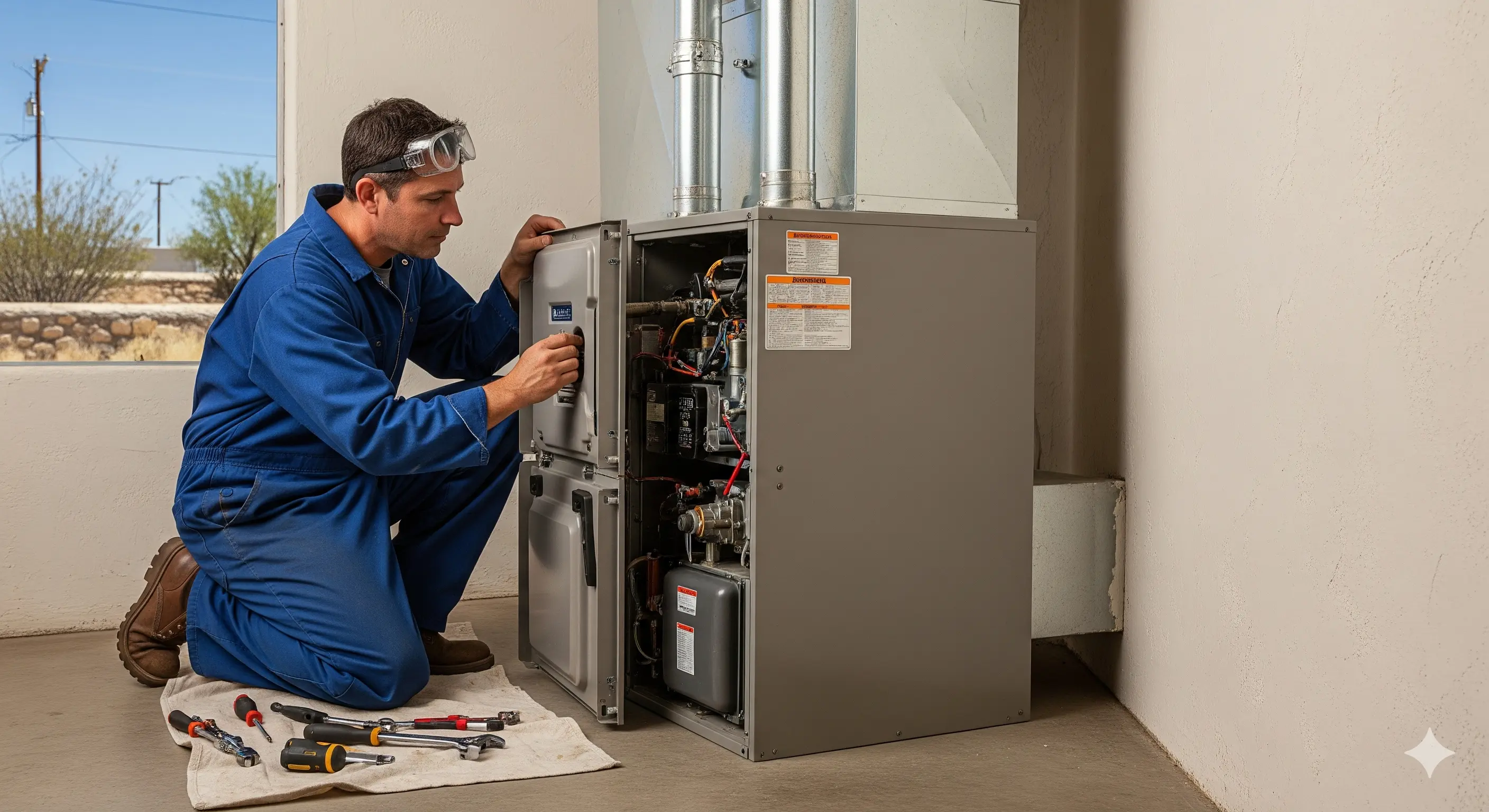
7 Mistakes to Avoid When Installing a Heater
February 06, 2026 By: One Way Heating & Cooling
When the desert sun dips below the horizon in El Paso, the temperature can plummet faster than most homeowners expect. Having a reliable heating system is a necessity for those chilly winter nights. However, the performance and lifespan of your furnace or heat pump are determined long before the first frost hits. They’re often determined on the day of installation.
A botched heater installation can lead to a decade of headaches, from skyrocketing utility bills to frequent breakdowns and even serious safety hazards. At One Way Heating and Cooling, we’ve seen how easy it is for things to go wrong when shortcuts are taken. To help you protect your investment, we’ve put together this guide on the 7 most critical mistakes to avoid during your next heating upgrade.
Key Takeaways: Avoiding Heater Installation Pitfalls
To ensure your home remains a sanctuary during the El Paso winters, keep these critical points in mind before your next HVAC project:
Precision Sizing is Non-Negotiable: Never rely on guesswork. A professional Manual J Load Calculation is the only way to ensure your heater isn't too small to keep up or too large to run efficiently.
The System is Only as Good as the Ducts: Hidden air leaks and poorly sized ductwork can waste up to 30% of your energy. Ensure your technician inspects the "veins" of your home before the new "heart" is installed.
Safety Requires Compliance: Proper venting and gas line connections are vital to prevent carbon monoxide poisoning and fire hazards. Always verify that your installer is following local El Paso building codes and securing the necessary permits.
Thermostat Placement Matters: Avoid "false readings" by keeping your thermostat away from windows, kitchens, and drafty exterior walls.
Startup Testing Protects Your Warranty: A heater isn't fully installed until its static pressure, gas levels, and temperature rise have been tested and calibrated to manufacturer standards.
Ready for a Stress-Free Installation?
Don't leave your family’s comfort and safety to chance. At One Way Heating and Cooling, we take pride in doing things the right way, the first time. Whether you're curious about how long a heating installation takes or you’re ready to upgrade to a high-efficiency system, our expert team is here to help.
Stay warm, stay safe, and save money.
Contact One Way Heating and Cooling Today!
1. Is your new heater the right size for your home?
One of the most common and damaging mistakes is choosing a heater based on a "guess" or simply replacing your old unit with the same size without a second thought.
The Danger of Oversizing: Many homeowners assume bigger is better. However, an oversized system will reach the desired temperature too quickly and shut off. This "short-cycling" puts immense strain on the motor and heat exchanger, leading to premature failure and uneven temperatures throughout the house.
The Burden of Undersizing: A unit that is too small will run constantly, struggling to keep your home warm. This results in massive energy bills and a system that burns itself out within just a few years.
The Solution: Professional installers use a Manual J Load Calculation. This process takes into account your home’s square footage, window types, insulation quality, and even the direction your house faces to ensure the BTU capacity is a perfect match for your needs.
2. Are you ignoring the health of your existing ductwork?
You can buy the most energy-efficient furnace in the world, but if your ductwork is leaky or poorly designed, that efficiency will never reach your living room.
Air Leaks: In many El Paso homes, ducts are located in attics or crawlspaces. If these ducts aren't sealed with mastic or metal tape, you could be losing up to 30% of your heated air to the outdoors.
Static Pressure Issues: If your new system is more powerful than your old one, your existing ducts might be too small to handle the increased airflow. This creates high "static pressure," which acts like a clog in your system’s veins, forcing the blower motor to work twice as hard.
Before installing a new heater, a thorough inspection of the duct system is mandatory to ensure it can handle the output of the new equipment.
3. Is your thermostat placed in the wrong location?
A thermostat is the "brain" of your HVAC system, but it can only make smart decisions if it has accurate information.
Common placement mistakes include putting a thermostat:
In Direct Sunlight: Heat from a window can make the thermostat think the room is 80°F when it’s actually 65°F, causing the heater to shut off too early.
Near Drafty Doors: Cold air from an entry door will cause the heater to run longer than necessary.
On Exterior Walls: These walls are affected by outside temperatures, leading to false readings.
In the Kitchen: Heat from cooking can trick the system into shutting down.
For the best results, the thermostat should be placed on an interior wall in a central, high-traffic area away from vents and direct light.
4. Are you compromising on safety and local building codes?
Heating systems involve high-voltage electricity and, in the case of furnaces, natural gas and combustion exhaust. There is no room for DIY experimentation here.
Carbon Monoxide Risks: If the exhaust flue isn't sloped correctly or is made of the wrong material, deadly carbon monoxide can back up into your home.
Gas Leaks: Improperly tightened gas lines or reused flexible connectors are common sources of dangerous leaks.
Fire Hazards: Using the wrong gauge of wire or an incorrectly rated circuit breaker during installation can lead to electrical fires.
Professional installers are trained to meet El Paso's specific mechanical codes, ensuring that your system is not only efficient but, more importantly, safe for your family.
5. Did you skip the manufacturer’s "Startup" testing?
A heater isn't "installed" just because it’s sitting in your attic and plugged in. A major mistake is failing to perform a comprehensive system startup.
A professional startup includes:
Gas Pressure Calibration: Ensuring the gas valve is set to the manufacturer's exact specification.
Temperature Rise Check: Measuring the difference between the return air and the supply air to ensure the heat exchanger isn't overheating.
Static Pressure Testing: Confirming that the air can move freely through the system without restriction.
Vent Testing: Using a combustion analyzer to ensure the exhaust is clear of dangerous gases.
Skipping these steps often voids the manufacturer's warranty immediately, leaving you responsible for any repairs.
6. Is your drainage system properly configured?
Modern, high-efficiency furnaces (condensing units) produce moisture as they operate. If this water isn't managed, it can cause significant damage to your home.
Clogged Drains: Without a properly sloped drain line, water can back up into the furnace cabinet, rusting out components.
Mold and Water Damage: Leaking condensate can ruin drywall, insulation, and flooring. If your unit is in the attic, a failed drainage system could even cause your ceiling to collapse.
A quality installation includes a dedicated secondary drain pan and an emergency shut-off switch that kills the power if water begins to overflow.
7. Why is hiring a licensed professional the only real option?
The temptation to hire a "handyman" or attempt a DIY install is often driven by a desire to save money. However, the hidden costs of amateur installation are much higher.
Warranty Protection: Most major brands require proof of professional installation to honor a warranty claim.
Long-Term Efficiency: A professional ensures the system is "tuned" to its peak SEER or AFUE rating.
Local Knowledge: El Paso has unique environmental factors, from high winds to extreme temperature swings, that require specific installation techniques.
Peace of Mind: Knowing your gas lines are sealed and your venting is safe allows you to sleep soundly through the winter.
Conclusion
Your home’s heating system is one of its most complex and expensive components. By avoiding common installation pitfalls like incorrect sizing, poor duct sealing, and skipped safety tests, you ensure that your investment pays off in the form of lower bills and reliable warmth.
Don't let a bad installation leave you out in the cold. For expert guidance and a "one-way" path to total home comfort, contact One Way Heating and Cooling today. Our team is ready to provide the professional, code-compliant installation your El Paso home deserves.
Frequently Asked Questions (FAQ)
How long does a typical heater installation take?
Most residential heating installations can be completed in a single day, usually between 4 and 8 hours. However, if your home requires new ductwork or a fuel conversion (e.g., switching from electric to gas), the process may take two days. To learn more about the process, check out our guide on what to expect during heating installation.
Is it the right time of year to install a new heater?
The best time to install a heater is during the spring and fall when HVAC companies are less busy and temperatures are mild. Planning ahead prevents you from being stuck in an emergency situation in the middle of January. For more timing tips, see our post on the best time to install a heater in El Paso.
How do I know if I should repair my old heater instead of replacing it?
If your unit is over 15 years old, requires frequent repairs, or if your energy bills have spiked, replacement is often more cost-effective. We've outlined the 6 signs you need heating repair to help you decide if a quick fix or a new system is the right choice.
Do I need a permit for a new heater in El Paso?
Yes. Any major mechanical change to your home requires a permit from the City of El Paso. This ensures a third-party inspector verifies that the gas, electrical, and venting work meets safety standards. A professional contractor like One Way Heating and Cooling will handle all permitting for you.
Can I use my existing thermostat with a new high-efficiency system?
Technically, yes, but it isn't recommended. New high-efficiency systems often have variable speeds that older thermostats can't control. Upgrading to a modern, programmable thermostat ensures you actually see the energy savings the new unit promises.