
Ice on Your AC Unit: What It Means and How to Fix It
April 03, 2026 By: One Way Heating & Cooling
It might seem logical: your air conditioner’s job is to create cold air, so a little ice shouldn't be a problem, right? Unfortunately, that is a common misconception. In a healthy, functioning HVAC system, you should never see ice or frost on the evaporator coils, the copper refrigerant lines, or the outdoor condenser unit.
Seeing ice is a major red flag. It indicates that the cooling process has been disrupted, causing the temperature of the internal components to drop below the freezing point. When this happens, the moisture that your AC normally removes from the air freezes instantly onto the unit. If left unaddressed, this ice can lead to a complete AC system breakdown or a "slugged" compressor—an expensive repair that every homeowner wants to avoid.
Why Does Ice Form on the Indoor Evaporator Coil?
The evaporator coil is the heart of the cooling process. As warm air from your home is blown over these cold coils, the refrigerant inside absorbs the heat. However, for this to work, there must be a constant exchange of thermal energy.
If the air moving over the coils isn't warm enough or if there isn't enough air at all, the refrigerant stays too cold. The temperature of the coil drops below 32°F, and the humidity in your home turns to ice on the metal fins.
Common causes for coil icing include:
Dirty Air Filters: This is the #1 cause of frozen units. A clogged filter chokes the system, preventing warm air from reaching the coils.
Closed Vents: Closing too many registers in unused rooms can restrict airflow enough to cause a freeze-up.
Blocked Return Grilles: If furniture or curtains are blocking the intake where the AC "breathes," the system will struggle and eventually freeze.
Dirty Coils: A layer of dust on the coils acts as insulation, preventing the refrigerant from absorbing heat efficiently.
How Do Low Refrigerant Levels Lead to Freezing?
It sounds counterintuitive—wouldn't less "coolant" mean the unit gets warmer? In reality, the opposite happens. HVAC systems operate on a precise balance of pressure and temperature.
When your system has a refrigerant leak, the pressure inside the evaporator coil drops. According to the laws of physics, as pressure drops, so does temperature. This causes the remaining refrigerant to expand more than it should, making the coil much colder than its design allows.
Because the coil is now "sub-freezing," it collects every bit of moisture from your home’s air and turns it into a layer of ice. If you see ice along the thin copper lines leading to your outdoor unit, a refrigerant leak is a very likely culprit.
Can a Faulty Blower Fan Cause Your AC to Freeze?
Yes, the blower fan is responsible for the "flow" in airflow. If the fan motor is sluggish, the capacitor is failing, or the fan belt is broken, the air won't move across the coils at the necessary speed.
Without that constant stream of warm air, the evaporator coil has no heat to absorb. Within minutes, the temperature of the coil can plummet, leading to a thick block of ice that completely blocks any remaining air from getting into your ductwork. You might hear the AC running, but you'll notice little to no air coming out of your vents.
What Should You Do Immediately If You Spot Ice?
If you see ice on your AC unit, the very first thing you must do is turn the system off at the thermostat. Continuing to run a frozen AC can cause permanent damage to the compressor, which is the most expensive part of the system. Switch the setting from "Cool" to "Off." You can turn the "Fan" setting to "On" to help circulate room-temperature air over the coils, which will speed up the melting process.
Follow these steps while waiting for a technician:
Check the Filter: If it’s gray and caked with dust, replace it immediately.
Inspect the Vents: Ensure all supply and return vents are open and unobstructed.
Check for Water: As the ice melts, it will produce a significant amount of water. Ensure your condensate drain line isn't clogged and that your drain pan isn't overflowing.
Do Not Pick at the Ice: Never try to break the ice off with a screwdriver or sharp object. The coils are made of thin copper and aluminum; you could easily puncture a line and cause a massive refrigerant leak.
How Does One Way Heating and Cooling Fix a Frozen AC?
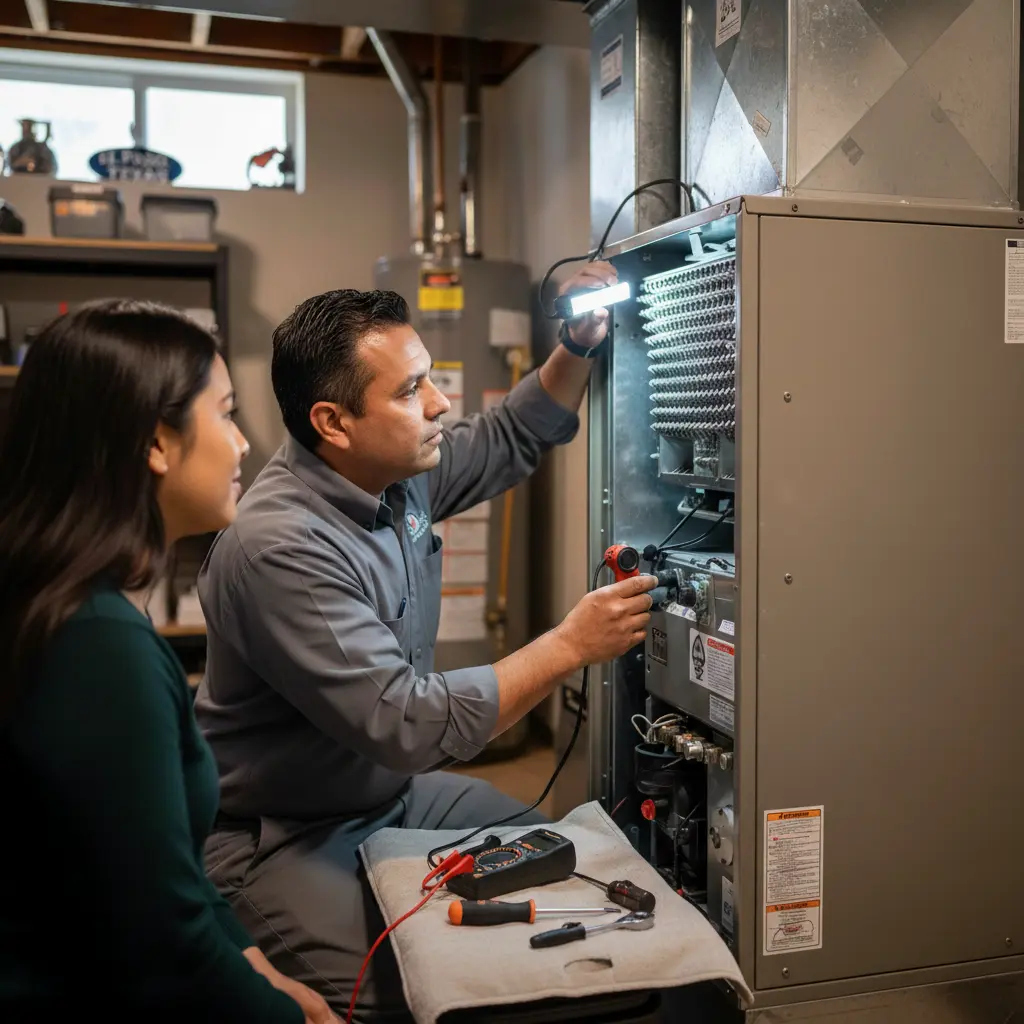
At One Way Heating and Cooling, we don’t just melt the ice and leave; we find the "why." Our technicians follow a rigorous diagnostic process to ensure the problem doesn't return the next day.
System Thaw: We ensure the unit is completely defrosted before testing.
Airflow Analysis: We check ductwork, filters, and blower motor speeds.
Leak Detection: If we suspect low refrigerant, we use specialized tools to find the source of the leak, repair it, and then recharge the system to factory specifications.
Component Inspection: We check the "contactors" and "relays" to make sure the outdoor unit isn't staying on when it should be off.
Why Is Professional Maintenance Essential to Prevent Ice?
Most "ice-on-AC" scenarios can be prevented with a simple annual maintenance plan. During a professional tune-up, One Way Heating and Cooling technicians clean the evaporator and condenser coils, check refrigerant pressures, and test the blower motor’s performance.
By catching a small refrigerant leak or a failing capacitor in the spring, you avoid the headache of a frozen system during the peak of an El Paso summer. Routine maintenance keeps your system running efficiently, which also lowers your monthly utility bills.
When Is It Time to Replace Your AC Instead of Repairing It?
If your AC unit is more than 10–15 years old and continues to freeze up due to refrigerant leaks, it may be time to consider a replacement. Older units often use R-22 refrigerant (Freon), which is no longer being produced and is extremely expensive to replace.
Investing in a new, high-efficiency refrigerated air system can save you money in the long run. New systems are designed to prevent freezing and come with advanced sensors that alert you to airflow issues before they turn into ice blocks.
Contact One Way Heating and Cooling Today
Don't let a frozen AC ruin your comfort. If you see ice on your unit or notice a drop in cooling performance, the experts at One Way Heating and Cooling are ready to help. We provide fast, reliable AC repair in El Paso to get your home back to the perfect temperature.
Call us today to schedule your repair!
Frequently Asked Questions (FAQ)
Q: How long does it take for an AC unit to defrost?
A: Depending on the thickness of the ice and the outdoor temperature, it can take anywhere from 1 to 24 hours for an AC unit to defrost completely. Turning the system fan to the "On" position while the cooling is "Off" can help speed up this process.
Q: Can I run my AC while it is frozen?
A: No. You should never run your AC if you see ice. This puts an immense strain on the compressor. Running a frozen unit can lead to total mechanical failure, resulting in a much higher repair bill.
Q: Will a dirty air filter really cause ice?
A: Yes. A dirty filter is the most common cause of ice. It restricts the airflow needed to keep the evaporator coil warm. Without that air, the coil drops below freezing and ice begins to form.
Q: Does ice on the AC mean I need more Freon?
A: Not necessarily, but it is a common cause. Ice can be caused by either low refrigerant (leaks) or airflow issues (dirty filters/broken fans). A professional technician needs to test the system to determine which issue is the culprit.
Q: Is ice on the outdoor pipes bad?
A: Yes. If you see ice on the copper lines leading to the outdoor condenser, it usually means the freezing has traveled all the way from the indoor coil. This is a sign of a serious issue that requires professional attention immediately.