
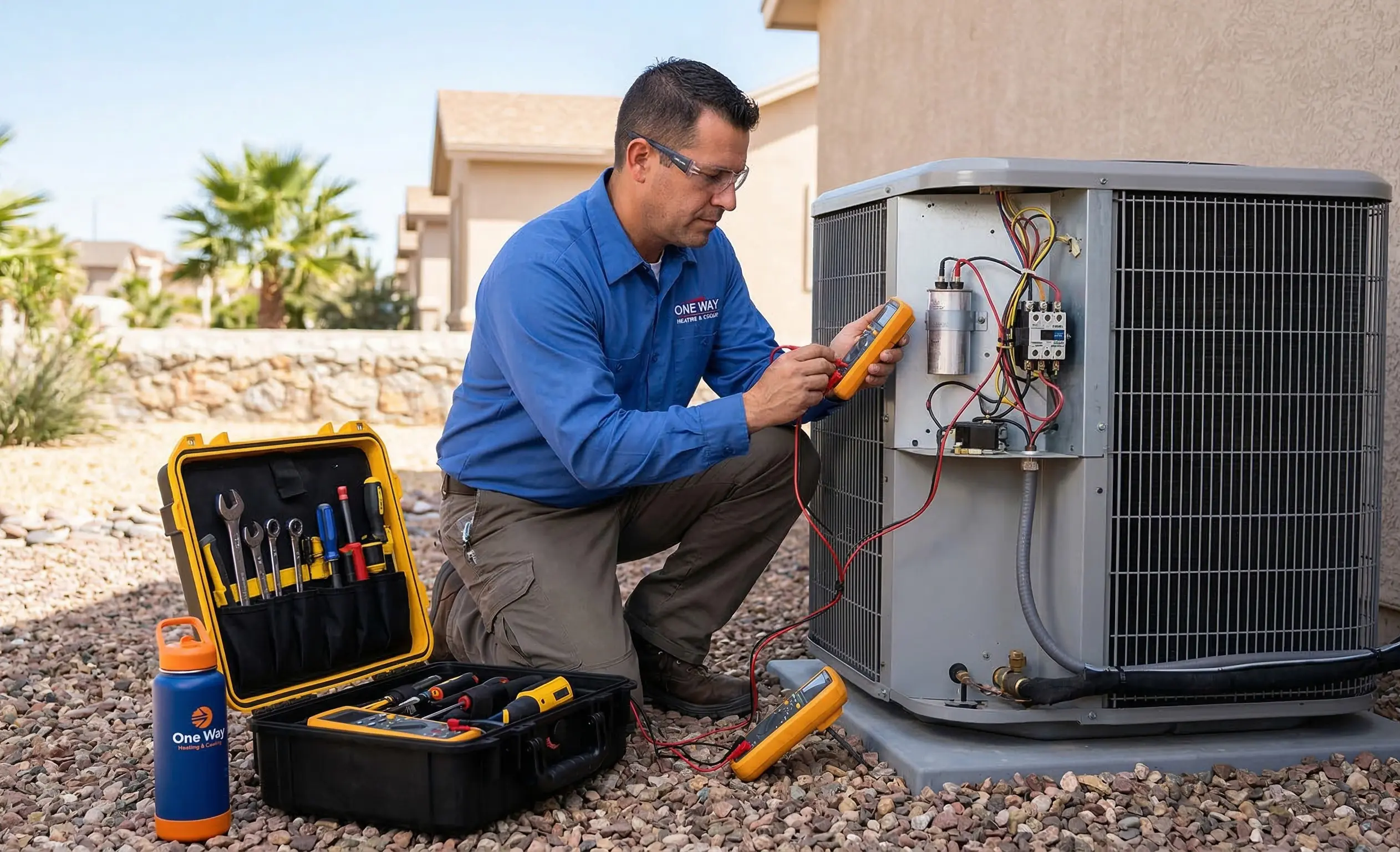
Indoor Unit Works but Outdoor Unit Won’t Start? 5 Main Causes
May 21, 2026 By: One Way Heating & Cooling
It is a scorching summer afternoon, and you notice the temperature inside your home is steadily climbing. You walk over to a vent and feel air blowing, but it is warm or room temperature. When you go outside to check on your air conditioner, you find a frustrating surprise: your indoor unit works but the outdoor unit won’t start.
This is one of the most common issues homeowners face, especially during intense summer heatwaves. When your indoor air handler runs without the outdoor condenser, your system is essentially acting as a giant window fan. It circulates the air inside your house but completely fails to remove any heat.
In this comprehensive guide, you will learn why this split-system disconnect happens, what you can safely check on your own, and when it is time to bring in professional air conditioning repair services.
Why does the indoor fan blow air when the outside unit is dead?
To understand this problem, it helps to realize that your central air conditioner is actually made of two separate systems that communicate through a thermostat. The indoor unit houses a blower fan that pushes air through your ductwork. The outdoor unit contains the compressor and condenser fan, which are responsible for actually cooling down the refrigerant.
Your thermostat sends separate electrical signals to the indoor and outdoor sections. If an electrical issue, a safety switch, or a component failure cuts off power to the exterior equipment, the indoor fan will often keep running by itself. It has no idea that its outdoor counterpart is offline, meaning it will continue blowing uncooled air into your rooms.
Is a tripped circuit breaker causing your outdoor unit failure?
Before panic sets in, the very first thing you should check is your home’s electrical panel. Your indoor air handler and your outdoor condenser unit run on completely separate electrical circuits because the outside unit pulls a massive amount of electricity.
An electrical surge, extreme outdoor heat, or a brief overload can cause the circuit breaker for the outdoor unit to trip. When this happens, the indoor unit continues to receive power and blow air, but the outdoor unit sits completely lifeless.
To check this, head to your main electrical box and look for the breaker labeled "AC" or "Condenser." If it has flipped to the "off" position or is hovering in the middle, switch it completely off and then firmly back to the "on" position. If the outdoor unit starts up and stays running, you may have just solved a minor electrical glitch. However, if the breaker trips again immediately, do not force it back on, as this indicates a serious electrical short that requires a professional HVAC technician.
Could a bad AC capacitor be keeping the compressor from starting?
If your electrical breakers are perfectly fine, the most likely mechanical culprit inside the outdoor condenser unit is a failed capacitor. Think of a capacitor as a collection of small, heavy-duty batteries that provide the massive electrical boost needed to jumpstart the compressor and the outdoor fan motor.
Air conditioner capacitors are highly sensitive to extreme heat and prolonged usage. During long summer stretches where temperatures regularly exceed 100°F, capacitors work under immense stress and frequently burn out or bulge.
When you have a bad AC capacitor, you might hear a faint humming sound coming from the outdoor unit as it tries to start, but the fan blades will not spin and the compressor will remain off. Replacing a capacitor involves working around high-voltage electrical currents that can store dangerous charges even when the power is turned off, so this fix is best left to licensed experts who handle AC repair in El Paso.
How do dirty coils or blocked airflow shut down the outdoor unit?
Air conditioning systems rely heavily on balanced pressure and continuous airflow to function safely. If your system cannot breathe, built-in safety mechanisms will actively shut down the outdoor unit to prevent catastrophic damage to the compressor.
In desert environments, strong winds carry fine sand, grit, and dust that quickly coat the exterior condenser coils and clog your indoor air filters. When a thick layer of dust insulates the outdoor coils, the unit cannot release heat efficiently, causing internal temperatures and pressures to skyrocket.
When these levels cross a dangerous threshold, a high-pressure safety switch trips, cutting power to the outdoor unit while letting the indoor fan run safely. Consistently replacing your indoor air filters and scheduling regular professional cleanings for your outdoor condenser unit can prevent these stressful safety shutdowns.
Can local desert pests damage your outdoor AC wiring?
A surprising but highly frequent cause of outdoor unit failures involves small wildlife. During periods of extreme desert heat or sudden weather shifts, local pests like mice, insects, and snakes seek out shaded shelter and protection inside the protective cabinets of outdoor air conditioners.
Once these critters squeeze inside, they often chew directly through the low-voltage thermostat wires or nest tightly against the electrical contactors. This can cause immediate electrical shorts, fry the control boards, or physically block the electrical contacts from closing.
If your indoor unit works but outdoor unit won’t start after a sudden storm or a period of non-use, pest damage is one of the primary areas an experienced technician will inspect. Repairing chewed wiring and clearing out wildlife debris requires specific safety gear and diagnostic tools to ensure the system is safely restored.
When should you call a professional for air conditioning repair services?
While checking a tripped circuit breaker or changing a clogged air filter are great tasks for a homeowner, most other causes of a dead outdoor unit require advanced diagnostic expertise. Messing with high-voltage lines, testing electrical contactors, or working around complex refrigerant loops without proper training can result in severe injuries or permanent damage to your expensive HVAC system.
You should contact a professional HVAC technician immediately if:
The outdoor unit circuit breaker trips repeatedly after being reset.
You hear a loud humming, clicking, or grinding sound coming from the silent outdoor unit.
You see physical signs of a bulging, leaking, or burnt capacitor through the side vents.
You suspect that desert pests have nested inside the electrical control box.
The system refuses to turn on even after you have let it rest and cool down for an hour.
Conclusion: Get Your Cool Air Back with One Way Heating & Cooling
Experiencing a situation where your indoor unit works but outdoor unit won’t start can quickly turn your comfortable home into an unbearable environment. Whether the root cause is a bad AC capacitor, tripped safety switches from dust buildup, or electrical wiring chewed by local pests, acting fast protects your compressor from failing entirely.
At One Way Heating & Cooling, we have over 40 years of hands-on experience keeping local AC systems running smoothly through the harshest summers. Our Texas state-licensed technicians operate directly out of our shop on Texas Rainbow Dr., meaning we know exactly how to diagnose and repair the unique cooling issues homes face in our desert climate. We service all makes and models, offer transparent pricing, and provide flexible financing options to get your home comfortable again without delay.
Don't suffer through the stifling heat with a broken air conditioner. Contact One Way Heating & Cooling today to schedule your professional AC repair service and bring fast, reliable cooling back to your home!
Frequently Asked Questions (FAQ)
1. Why is my indoor AC unit running but the outdoor unit has no power?
This usually occurs because a circuit breaker has tripped specifically for the outdoor unit, or a safety switch has opened inside the condenser. Your indoor and outdoor components run on separate electrical circuits, meaning the indoor fan can continue to circulate air even if an electrical fault or safety shutdown cuts off power to the exterior equipment.
2. How can I tell if my outdoor AC unit capacitor has gone bad?
The most common signs of a bad AC capacitor include a distinct humming noise coming from the outdoor unit while the fan fails to spin, or the unit refusing to start up entirely. Visually, a failed capacitor will often look swollen, bulged at the top, or may even show signs of leaking an oily substance inside the service panel.
3. Will a clogged air filter cause my outdoor AC unit to stop running?
Yes, a severely clogged air filter restricts airflow across your indoor evaporator coil, which can cause the system to freeze up or overheat. This drastic drop in efficiency triggers safety pressure switches that automatically shut down the outdoor compressor to prevent permanent mechanical damage, while leaving the indoor fan running.
4. Can desert pests really cause my outdoor air conditioner to fail?
Yes, desert pests like mice, snakes, and insects frequently crawl inside outdoor condenser units to escape extreme temperatures. Once inside, they can chew through sensitive control wiring, build nests that block airflow, or get trapped inside electrical contactors, causing sudden short circuits that stop the unit from starting.
5. Is it safe to reset my AC circuit breaker if it trips?
You can safely reset a tripped AC breaker once to see if it was caused by a temporary electrical surge or extreme heat. However, if the breaker trips a second time immediately or shortly after restarting, you must leave it off and call a professional technician, as this indicates a dangerous short circuit or a failing compressor.