
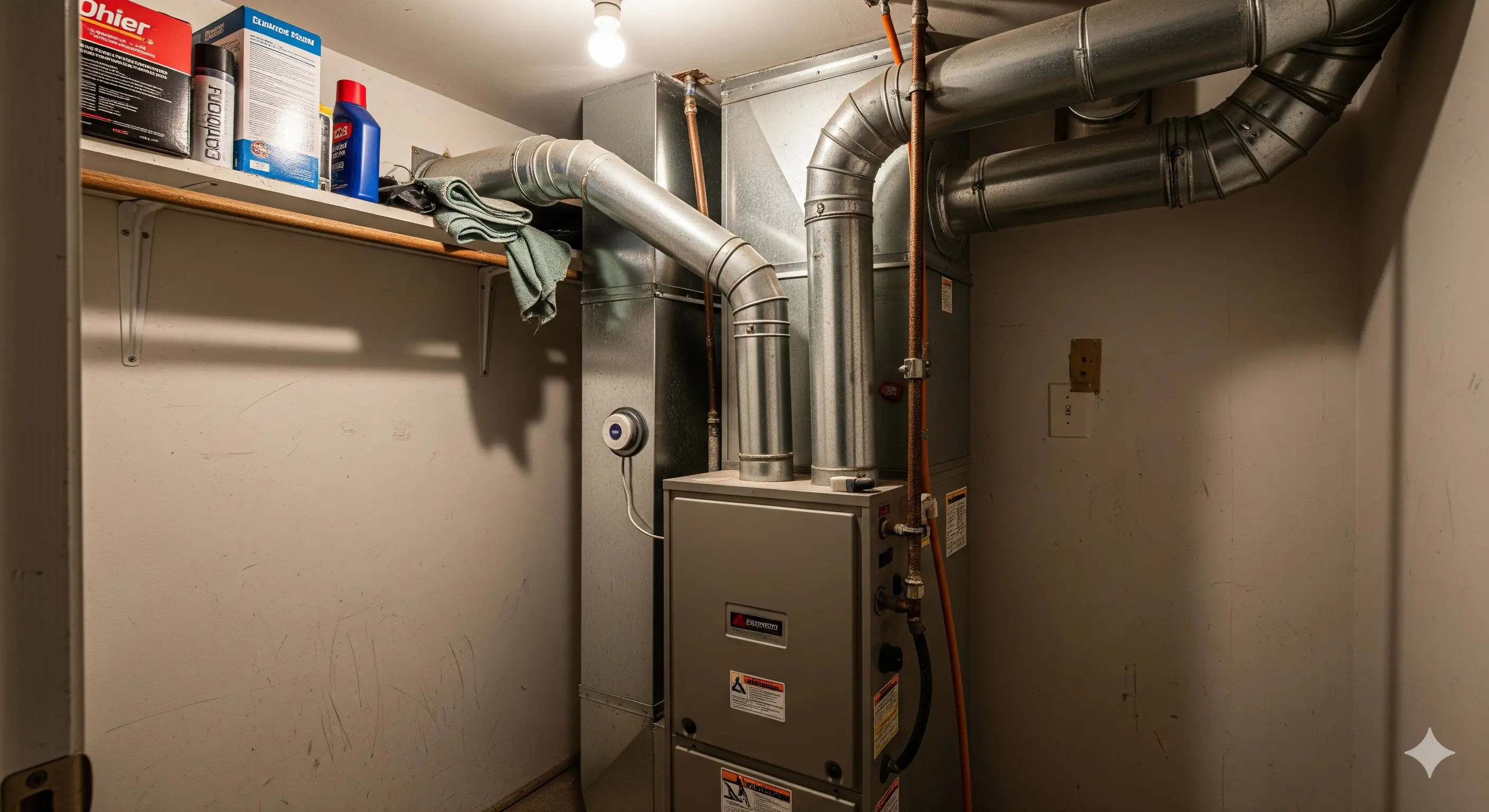
Signs Your Furnace Needs More Than Just Maintenance
December 30, 2025 By: One Way Heating & Cooling
Winter in El Paso can be unpredictable. One minute it’s mild, and the next, the temperatures drop, demanding your furnace work overtime to keep your family comfortable. You likely already know that annual heating maintenance is the gold standard for keeping your system running smoothly. It prevents breakdowns, improves efficiency, and extends the life of your unit.
However, there comes a point in every furnace’s life when a simple tune-up isn’t enough. While cleaning coils and changing filters are essential, they can’t fix a cracked heat exchanger or a failing motor. Ignoring the subtle (and not-so-subtle) red flags that your system is struggling can lead to sudden breakdowns, higher costs, and even safety hazards.
So, how do you know when to call One Way Heating and Cooling for a serious repair or a potential replacement? Here are the tell-tale signs that your furnace needs more than just a seasonal check-up.
Is Your Energy Bill Skyrocketing Without a Clear Cause?
Have you noticed your utility bills creeping up, even though your usage hasn't changed? It is normal for bills to fluctuate slightly with the weather, but a sharp, unexplained increase is a major red flag.
When a furnace loses efficiency, it has to run longer and work harder to reach the temperature set on your thermostat. This extra strain consumes more energy, hitting you directly in the wallet. While a maintenance visit includes cleaning components that help airflow, it cannot fix internal wear and tear that causes efficiency drops. If your bill has jumped significantly compared to the same time last year, it is time to have a professional investigate deep-seated mechanical issues.
Why is the Pilot Light Burning Yellow Instead of Blue?
Take a moment to peek at your furnace’s burner flame. What color is it?
Blue Flame: This is the standard for a healthy, clean-burning gas furnace.
Yellow or Flickering Flame: This is a serious warning sign.
A yellow flame indicates incomplete combustion. This means the gas isn't burning off entirely, which can lead to the production of Carbon Monoxide (CO). CO is an odorless, colorless gas that can be deadly if it leaks into your home. A yellow flame can be caused by dirty burners, but it can also signal a cracked heat exchanger—a critical failure that requires immediate professional repair or replacement to ensure your family's safety.
What Do Those Strange Banging and Squealing Noises Mean?
Furnaces are not silent, but they should be relatively quiet. A low hum of air moving through the vents is normal; a symphony of clanks and squeals is not.
If you hear these sounds, your furnace is crying out for help:
Squealing or Screeching: This often points to a slipped blower belt or a motor bearing that is failing.
Banging or Popping: Loud bangs when the furnace turns on can indicate "delayed ignition," where gas builds up before igniting, causing a mini-explosion inside the chamber. It can also mean your ductwork is expanding and contracting violently.
Rattling: Loose panels or screws are simple fixes, but deep rattling can mean a vital internal component has broken loose.
Maintenance can tighten a few bolts, but these noises usually indicate parts that are on the verge of total failure and need replacement.
Are You Constantly Adjusting the Thermostat?
Does your living room feel like a sauna while your bedroom feels like an icebox? Uneven heating is a common frustration that often points to issues beyond a dirty filter.
If you find yourself constantly nudging the thermostat up and down to get comfortable, or if your furnace is "short cycling" (turning on and off rapidly), your system is struggling. This could be due to a failing blower motor, issues with the ductwork system, or a thermostat that has lost its calibration. In older units, it often means the furnace simply no longer has the power to distribute air evenly throughout your home.
Is Your Furnace More Than 15 Years Old?
Age is perhaps the most significant factor in the "repair vs. replace" debate. The average life expectancy of a well-maintained gas furnace is between 15 and 20 years.
Even if your older furnace seems to be running okay, it is likely far less efficient than modern models. A furnace from 2005 might have an efficiency rating (AFUE) of 70-80%, whereas new models can reach 95% or higher. If your unit is approaching the two-decade mark and requires a significant repair, it is often more financially savvy to invest that money into a new, energy-efficient system rather than patching up a dying one.
Why Is There So Much Dust or Soot Around the Vents?
Have you noticed an accumulation of dust, soot, or rust particles around your heating vents? While El Paso is dusty, your furnace shouldn't be contributing to the mess.
Excessive dust often means your filtration system is failing or the ductwork has been compromised. However, the presence of soot is darker and more dangerous—it is a sign of poor combustion (similar to the yellow flame issue). If you see soot, do not wait for your annual maintenance appointment. This requires a diagnostic repair to ensure your indoor air quality is safe.
Conclusion
Regular maintenance from One Way Heating and Cooling is vital for the longevity of your HVAC system. It keeps warranties valid and catches small issues before they become big ones. However, when your furnace starts showing signs of safety hazards, mechanical failure, or extreme inefficiency, a simple tune-up won't cut it.
Don't wait for your furnace to quit on the coldest night of the year. If you recognize any of these signs, it is time to bring in the experts to evaluate whether a repair will suffice or if it is time to upgrade to a modern, efficient system.
Is your furnace trying to tell you something? Contact One Way Heating and Cooling today to schedule a comprehensive inspection.