
Why Is There Weak Airflow From My Vents? 7 Causes and Fixes
April 08, 2026 By: One Way Heating & Cooling
Have you ever walked over to your AC vent during a scorching El Paso afternoon, expecting a refreshing blast of cold air, only to feel a tiny, pathetic puff? It is frustrating, uncomfortable, and—in the middle of a Texas summer—it can actually be dangerous.
Weak airflow is one of the most common complaints we hear at One Way Heating and Cooling. While it might seem like a minor annoyance, low air pressure is often a "canary in the coal mine" for much larger HVAC problems. If your system is struggling to push air, it’s working twice as hard to cool your home, which means higher electric bills and a shorter lifespan for your unit.
In this guide, we will break down exactly why your vents feel weak and what you can do to get the air moving again.
Is a Dirty Air Filter Blocking Your Airflow?
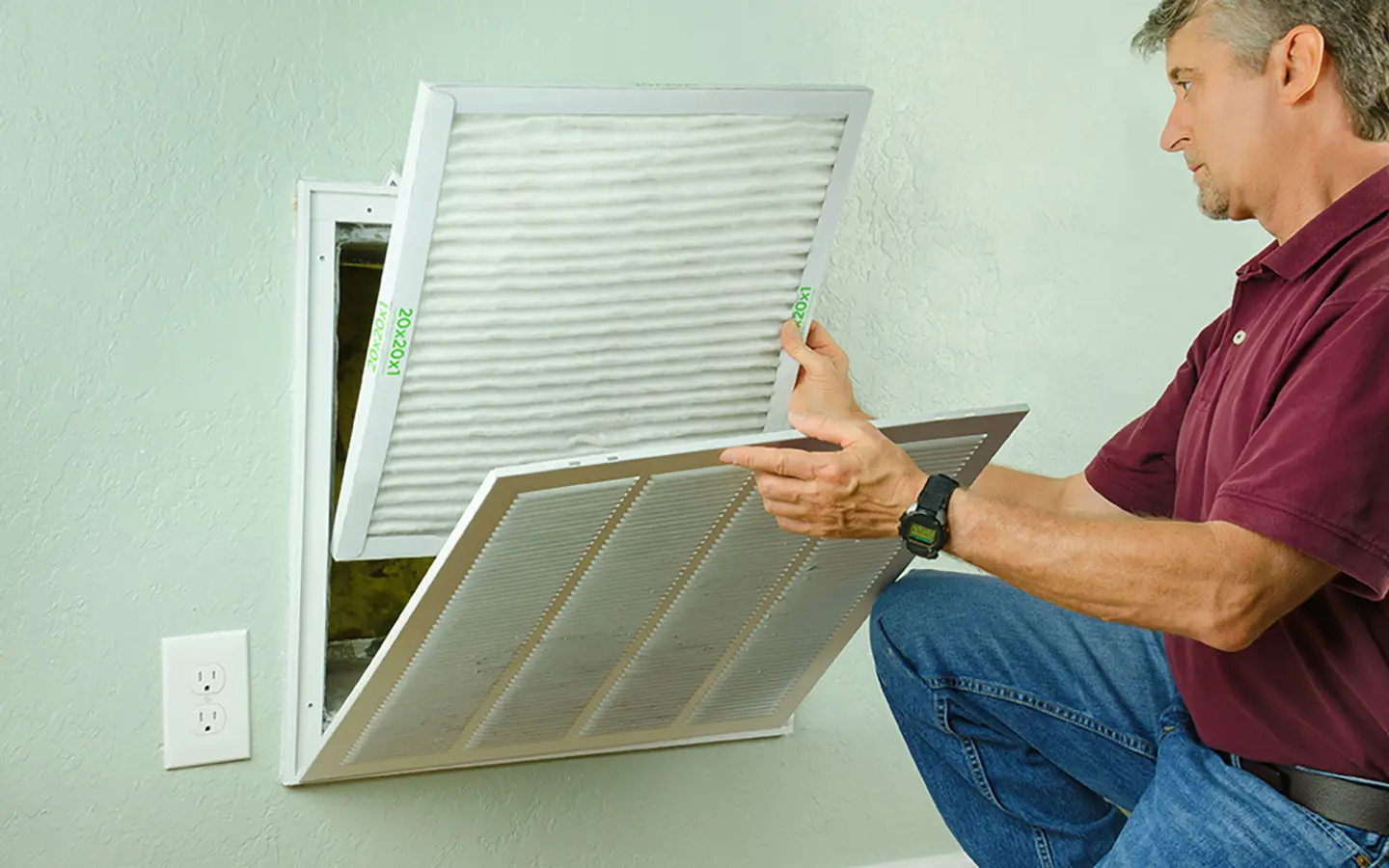
The most common reason for weak airflow is also the simplest to fix: a dirty air filter. Your HVAC system is designed to "breathe." It pulls in warm air, cools it, and pushes it back out. If the filter is caked with El Paso dust, pet dander, and lint, the blower motor has to fight against a wall of debris.
When the filter is clogged, the volume of air passing through drops significantly. You’ll notice the air coming out of the vents feels weak, and the unit may run for much longer cycles than usual.
The Fix: Check your filter every 30 days. If you can’t see light through it, replace it. In our dusty climate, high-quality pleated filters are great, but they need frequent changing to keep your airflow strong.
Could Your Evaporator Coil Be Frozen?
It sounds counterintuitive—how can an air conditioner be too cold? If your airflow is restricted by a dirty filter or low refrigerant, the evaporator coil (the part that actually cools the air) can drop below freezing. Condensation on the coil turns to ice, creating a literal block of ice that prevents air from passing through.
If you notice weak airflow accompanied by a lack of cooling or actual ice visible on the outdoor unit or indoor lines, you likely have a frozen coil.
The Fix: Turn your AC off immediately and switch the fan setting to "On." This helps melt the ice. Once thawed, call a professional. Running an AC with a frozen coil can lead to a dead compressor—a very expensive repair.
Are Your Air Ducts Leaking or Disconnected?
Think of your ductwork as a series of straws. If there is a hole in the middle of the straw, it’s much harder to pull liquid through it. Similarly, if your ducts have gaps, cracks, or have become disconnected in the attic or crawlspace, the cold air is blowing into your walls instead of your living room.
In many El Paso homes, older ductwork can deteriorate over time or be damaged by rodents. This results in "lost" air pressure, making the flow at the vent feel incredibly weak.
The Fix: A professional duct inspection can identify leaks. Sealing these gaps with mastic or metal tape (not standard "duct" tape) can restore your pressure and lower your energy bills instantly.
Is the Blower Motor Failing?
The blower motor is the heart of your airflow. It spins a fan that pushes conditioned air through your home. Over time, these motors can wear out, become coated in heavy dust, or suffer from electrical issues.
If the motor is spinning slowly or intermittently, the airflow will feel weak. You might also hear a humming or screeching sound coming from your indoor unit, which is a clear sign that the motor is on its last legs.
The Fix: This is a job for the pros. A technician can test the capacitors and the motor’s amperage to see if it needs a simple cleaning or a full replacement.
Are Too Many Vents Closed in Your Home?
There is a common myth that closing vents in unused rooms saves money. In reality, modern HVAC systems are balanced for the specific square footage of your home. When you close vents, you increase the "static pressure" inside the ducts.
This back-pressure makes the blower motor work harder and can actually cause the air coming out of the open vents to feel weaker because the system is struggling to move the air against the resistance.
The Fix: Keep at least 80% of your registers open at all times. This maintains the proper pressure balance and ensures the air flows freely throughout the house.
Is Your Ductwork Undersized or Poorly Designed?
Sometimes, weak airflow isn't a "breakdown" issue but a design flaw. If you’ve recently added a room to your home or converted a garage without updating your HVAC system, your existing ducts may not be large enough to handle the volume of air required.
Undersized ducts act like a bottleneck. No matter how powerful your AC unit is, the air simply can't get through the small pipes fast enough to create a strong breeze at the vent.
The Fix: An HVAC specialist can perform a "Manual D" calculation to determine if your ductwork is sized correctly for your home's needs.
Could an Obstruction Be Hiding in the Vents?
It sounds strange, but we have found everything from children’s toys to bird nests inside ductwork. If the weak airflow is only happening in one specific room, there is likely a local obstruction.
Additionally, check to see if furniture, long curtains, or rugs are blocking the return air grilles or the supply vents. If the system can't pull air in, it can't push air out.
The Fix: Remove any furniture blocking your vents. If the blockage is internal, a professional duct cleaning can clear out the debris and restore the path for your air.
Comparative Analysis: Why One Way Stands Out
When looking at national search results for "weak airflow," many guides focus on generic DIY fixes that don't account for the El Paso climate. In the Southwest, our air conditioners face extreme heat and high levels of fine desert dust.
Unlike "big box" national competitors, One Way Heating and Cooling focuses on:
Refrigerated Air Specialists: We understand the high-pressure requirements of refrigerated systems compared to old-school swamp coolers.
Local Environment: We know how El Paso's wind and sand affect your external condenser and internal filtration.
Experienced Diagnostics: With over 40 years of experience, we don't just guess—we use precision tools to measure your static pressure and find the root cause.
Conclusion: Don't Settle for a Weak AC
Weak airflow is more than just a comfort issue; it's a sign that your HVAC system is struggling. Whether it's a simple filter change or a complex duct repair, addressing the problem early will save you money on energy bills and prevent a total system breakdown during the hottest part of the year.
At One Way Heating and Cooling, we’ve spent four decades keeping El Paso families cool. We offer expert diagnostics and fast, reliable repairs for all makes and models.
Is your AC losing its punch? Don't wait for it to quit on you!
Contact One Way Heating and Cooling today to schedule your AC repair and get your airflow back to 100%!
Frequently Asked Questions (FAQ)
Q: Can a low refrigerant level cause weak airflow?
A: Yes, indirectly. Low refrigerant causes the evaporator coil to freeze. The ice then physically blocks the air from passing through the unit, leading to weak or nonexistent airflow at the vents.
Q: Why is my AC blowing air, but it’s not very strong?
A: The most likely culprits are a clogged air filter, a dirty blower fan, or leaking ductwork. If the air is cool but the volume is low, the system is likely struggling with a blockage or a mechanical motor issue.
Q: How often should I have my ducts cleaned?
A: Generally, every 3 to 5 years is recommended. However, in El Paso, where dust is more prevalent, you might need it more often if you notice dust buildup around your vent covers or experience unexplained respiratory allergies.
Q: Is weak airflow a sign that I need a new AC?
A: Not necessarily. Most airflow issues can be fixed with a repair, such as replacing a motor, sealing ducts, or cleaning a coil. However, if your system is over 12-15 years old and experiencing multiple failures, it might be time to consider a more efficient installation.