
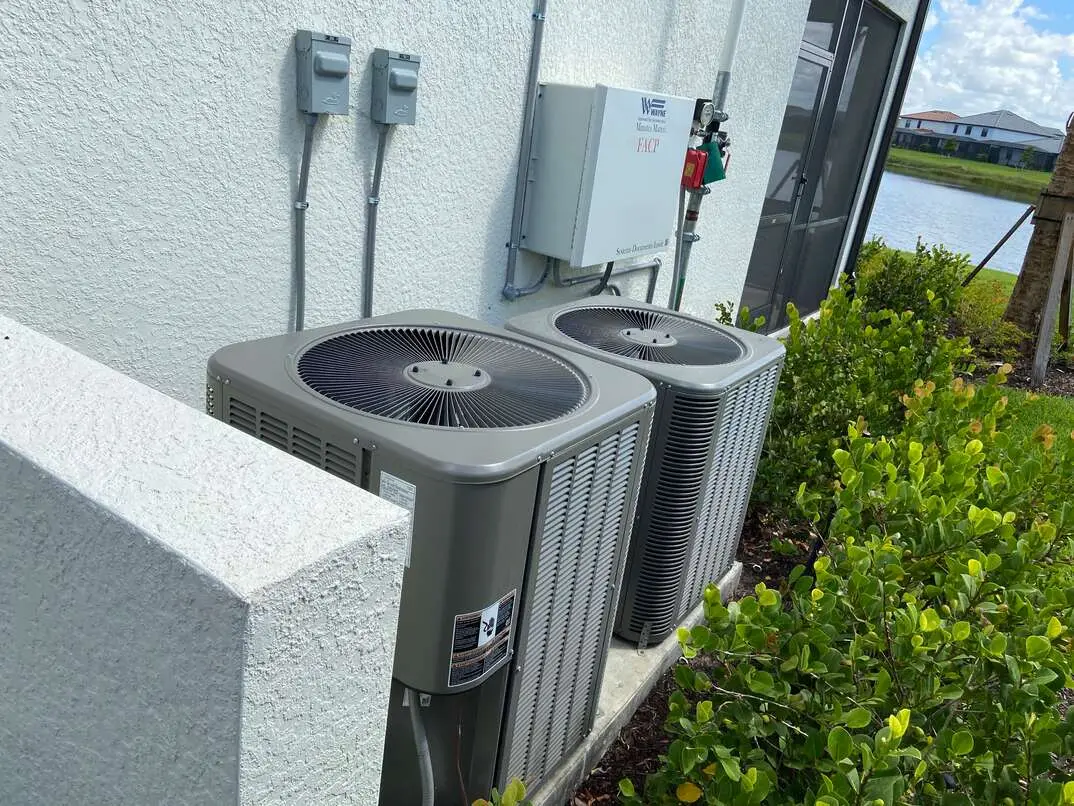
2000 Sq Ft HVAC Cost: Complete Price Guide for Your Home
December 11, 2025 By: One Way Heating & Cooling
TL;DR: New HVAC System Cost for 2000 Sq Ft
Average Cost Range: A complete AC and furnace replacement for a 2,000 sq ft home generally costs between $10,000 and $20,000.
Typical Investment: Most standard, high-efficiency system installations fall within the $13,400 to $14,000 range.
Critical Sizing: The required size is typically 3.0 to 3.5 tons. However, this must be verified by a professional Manual J Load Calculation to ensure optimal performance and avoid costly mis-sizing.
- Key Cost Drivers: The final price is heavily influenced by:
System Type: (Central split system, heat pump, or ductless mini-split).
Efficiency Rating (SEER2/AFUE): Higher efficiency costs more initially but provides significant long-term energy savings, especially in the El Paso climate.
Hidden Costs: Expect potential increases if your installation requires extensive ductwork modifications or if you are doing a refrigerated air conversion.
Next Step: Contact One Way Heating and Cooling for a free, accurate estimate tailored to your home's unique specifications.
The Cost of Comfort: Budgeting Your HVAC Replacement for a 2000 Sq Ft Home
If you own a home around 2,000 square feet, the question of "how much will a new heating and cooling system cost me?" is likely one of the most important you’ll face. Whether you’re replacing an aging unit, converting to refrigerated air, or installing a system in new construction, this decision represents a major financial investment in your family’s comfort and long-term security.
We know that simply wanting a single price tag is natural. However, the true cost of an HVAC system is never a flat number; it is a calculated figure based on a dozen critical factors unique to your specific home. These factors include everything from the El Paso climate constantly battling your windows to the hidden complexity of your existing ductwork.
At One Way Heating and Cooling, we believe in transparent, comprehensive information. We are locally owned and operated right here in El Paso, and we understand the intense demands our desert climate places on your system. We’ve leveraged our deep local experience and current industry data to provide you with a definitive guide to HVAC system costs for a 2,000 sq ft house.
This guide will break down the true costs, explain the critical components that influence the final price, and walk you through the essential steps needed to secure a perfectly sized, highly efficient, and affordable system. Consider this your roadmap to making a smart, informed decision that guarantees comfort without breaking the bank.
What is the Average Cost of a New HVAC System for a 2000 Sq Ft Home?
This is the question every homeowner asks first, and we can provide a clear, current industry average to help you establish a baseline budget.
For a combined HVAC system installation, which includes both a new air conditioner and a new furnace in a home of approximately 2,000 square feet, the general national cost range typically falls between $10,000 and $20,000.
Breaking Down the Average Investment
While this range might seem wide, the vast majority of homeowners in the U.S. investing in a standard, mid-range system replacement will spend closer to the middle. Current industry reporting suggests that the average cost for a standard combined central air conditioning and gas furnace system in a 2,000 to 2,500 square foot home is approximately $13,400 to $14,000.
Let’s explore what drives the low, average, and high ends of this spectrum:
Entry-Level/Low-End Installations ($6,000 – $10,000): This budget tier covers a basic system change-out where you replace existing units with standard-efficiency models of the same type. This assumes no ductwork modification is needed and typically involves lower SEER/AFUE rated units.
Mid-Range/Average Installations ($10,000 – $15,000): This is the most common investment. It includes a standard installation of a high-efficiency system (e.g., 14.3 to 16.1 SEER2) with a gas furnace. It covers standard labor, necessary minor modifications, and often a robust warranty.
Premium/High-End Installations ($15,000 – $20,000+): This category involves the installation of ultra-high-efficiency, variable-speed, or specialized systems (like high-performance heat pumps or geothermal). This price level typically includes extensive ductwork replacement or modification, advanced features like zoning systems, and premium equipment brands.
Why Replacement vs. New Installation Matters
The total project cost also hinges on whether you are simply replacing existing components or installing a new system from scratch:
Replacement (Change-Out): If your home already has existing, functional ductwork, a furnace, and an outdoor AC unit, the cost is lower. This is because technicians are primarily removing old equipment and installing new units in the same location using the existing infrastructure.
New Installation (Retrofit/Conversion): If you are converting from an older system (like an evaporative cooler, common in El Paso) to a modern refrigerated air system, the cost will be significantly higher. This process requires the installation of all-new ductwork throughout the home, which is a substantial labor and material expense, often adding $2,100 to $4,000 or more to the final price for a 2,000 sq ft home.
Regardless of your project type, the best way to get an accurate price is through a detailed, free estimate from a trusted local contractor like One Way Heating and Cooling. We provide transparent pricing so you understand exactly what you are paying for, from equipment to labor.
Why Is the Cost Range So Wide?
The variation in HVAC pricing is directly related to the complexity and performance level of the components chosen for your home. While the square footage gives us a starting point, it is the choices you make, and the specific needs of your El Paso house, that finalize the budget.
The three primary variables that create the massive cost gap are:
The Type of System You Choose: Are you installing a traditional furnace and AC split system, an energy-efficient heat pump, or a ductless mini-split system? Each has a vastly different installation complexity and equipment price point.
The Required Size and Tonnage: Is your home well-insulated, or is it a 1970s ranch house with single-pane windows? A home with poor insulation requires a larger, more powerful, and therefore more expensive unit to keep up with the heat gain.
The System’s Efficiency Rating: Choosing a standard-efficiency unit (the minimum required by law) versus a premium, variable-speed unit (which can save you thousands in energy bills over time) creates the largest difference in upfront cost.
Understanding these three factors is key to navigating the HVAC market and ensuring you receive the correct system, not just the cheapest one. We will explore each factor in detail, helping you compare how each choice impacts your initial investment and long-term energy savings.
How Does the Type of HVAC System Affect the Price?
The mechanical heart of your home, the HVAC system, comes in several distinct configurations. The best choice for your 2,000 sq ft house depends heavily on your climate needs, existing infrastructure, and budget. For the El Paso region, cooling is often the paramount concern, but reliable heating is essential during the winter months.
Here are the most common system types and how their complexity and components influence the installation cost:
1. Central Air Conditioner and Gas Furnace (The Split System)
This is the most traditional and common setup in the country, especially in regions like El Paso that experience distinct hot and cold seasons.
Setup and Cost: This system requires two separate units: an outdoor condensing unit (AC) and an indoor air handler/furnace. The combined cost is mid-to-high because you are purchasing two primary pieces of equipment. The Central AC Unit installed cost generally ranges from $3,500 to $8,500, while the Gas Furnace Unit typically runs between $4,000 and $10,000. The total combined cost largely aligns with the $10,000 to $20,000 full system average.
Key Advantage: Provides the most powerful, rapid heating (with natural gas being very effective) and consistent cooling distributed evenly through ductwork.
2. Air-Source Heat Pump System
Heat pumps offer an energy-efficient alternative because they provide both heating and cooling in a single unit, using refrigerant to move heat rather than generating it.
Setup and Cost: This system uses one outdoor unit and one indoor air handler, eliminating the need for a separate furnace (though they may be paired with an electric or gas backup). The equipment is generally more complex and often comes with a higher upfront price than a simple AC-only installation. The installed cost typically ranges from $4,000 to $10,000 or more for a central unit.
Key Advantage: Exceptional energy efficiency, as they are simply moving existing heat (or cooling) rather than burning fuel. This can drastically lower monthly utility bills, making the higher initial investment pay off over time. They are particularly well-suited for moderate climates, but modern technology allows them to perform very well in the El Paso heat.
3. Ductless Mini-Split Systems
Mini-splits are ideal for homes that lack existing ductwork, home additions, or for creating specific temperature zones within the 2,000 sq ft home.
Setup and Cost: This system connects an outdoor compressor to multiple indoor wall-mounted units (heads) in different rooms or zones. The price is calculated per zone or indoor unit, making the total cost scale with the number of rooms you want to cool/heat. The installed cost ranges from $2,000 to $5,000 per zone/indoor unit. For a 2,000 sq ft house requiring 4 or 5 zones for full coverage, the total cost could range from $8,000 to $20,000 or higher, depending on efficiency.
Key Advantage: Provides zoning capability, allowing you to heat or cool only the rooms you are using, which is highly energy efficient. It is often the best choice for refrigerated air conversions when installing new ductwork is cost-prohibitive or impractical.
What Is the Right Size (Tonnage) HVAC for a 2000 Square Foot House?
Getting the right size is the single most important factor, more important than the brand name or the final cost. An incorrectly sized system will never cool or heat your 2,000 sq ft home effectively, regardless of how much you paid for it.
Why the "Rule of Thumb" is Dangerous
A common, rough industry guideline suggests that a home requires about 1 ton of cooling capacity for every 400 to 600 square feet. Applying this basic calculation to a 2,000 sq ft home suggests you need a system between 3.3 tons and 5 tons.
Based on general industry consensus for a 2,000 sq ft home, the required size is typically:
3.0 to 3.5 Tons (36,000 to 42,000 BTUs)
However, this is only a starting point. In El Paso, where temperatures are often extreme and cooling loads are high, a slightly larger unit or a higher efficiency rating may be necessary to overcome the local climate conditions.
The Only Professional Solution: The Manual J Load Calculation
At One Way Heating and Cooling, we insist on performing a professional load calculation, known as an ACCA Manual J. This calculation takes the guesswork out of sizing by factoring in the specific characteristics of your home, including:
Local Climate: We factor in El Paso’s specific temperature and humidity levels.
Insulation Quality: How well-sealed are your walls, attic, and foundation?
Windows and Doors: The number, size, type (single/double pane), and direction your windows face (a south-facing window brings in more heat).
Ceiling Height: Taller ceilings mean more air volume to heat and cool.
Home Orientation: Which direction the house faces relative to the sun.
The Danger of Mis-Sizing:
When a system is mis-sized, you face several problems:
Oversized Systems (Too Large): These units "short-cycle," meaning they turn on and off too frequently. This causes poor dehumidification, leaving the air clammy, and shortens the lifespan of the components due to increased wear and tear. It also means you paid more upfront for unnecessary capacity.
Undersized Systems (Too Small): These units never reach the set temperature, forcing them to run constantly. This results in incredibly high energy bills, increased strain on components leading to premature failure, and ultimately, insufficient comfort in your home.
By performing a detailed Manual J calculation, One Way Heating and Cooling ensures your new 3-ton or 3.5-ton unit for your 2,000 sq ft home is perfectly matched to your specific heating and cooling requirements, guaranteeing both maximum comfort and optimal energy efficiency.
How Much Does System Efficiency (SEER2 & AFUE) Impact Upfront and Long-Term Costs?
Energy efficiency is one of the most critical factors influencing both the initial purchase price and your long-term operating expenses. When considering an investment in a 2,000 sq ft home, you must look beyond the sticker price and focus on the lifetime cost of ownership.
Understanding the Key Efficiency Ratings
Modern HVAC systems are rated using updated metrics to reflect real-world performance:
SEER2 (Seasonal Energy Efficiency Ratio 2): This applies to air conditioning and heat pumps (cooling mode). It measures how efficiently the unit converts energy into cooling power over an entire season. As of 2023, the minimum standard for new AC systems in the Southwest region (including El Paso) increased.
AFUE (Annual Fuel Utilization Efficiency): This applies to gas furnaces. It measures the percentage of fuel converted into usable heat over a year. An AFUE of 90 means 90% of the gas is converted to heat, while 10% is lost through the chimney.
The Efficiency vs. Cost Trade-Off
The relationship between efficiency and cost is straightforward: the higher the SEER2 or AFUE rating, the higher the equipment price, but the lower your monthly utility bills will be.
Standard Efficiency (13.4 to 15 SEER2): This offers the lowest initial cost and provides modest savings, just meeting minimum regulatory standards.
High Efficiency (16 to 18 SEER2): This involves a moderate to high initial cost but provides significant annual savings, often justifying the premium in 3 to 7 years.
Premium/Ultra-High Efficiency (19 SEER2+): This has the highest initial cost. It includes systems with variable-speed technology and delivers the maximum possible long-term savings.
For a large home in the El Paso heat, choosing a high-efficiency system (16 SEER2 or higher) is often the smartest financial move. While the unit may cost $1,000 to $3,000 more upfront than a standard unit, the reduction in cooling costs during those brutally hot summer months often creates a faster, more substantial return on investment.
We offer financing options specifically to help make high-efficiency systems, which deliver better long-term savings, accessible to nearly any budget.
What Hidden Installation Factors Will Increase My Total Cost?
While equipment type and size make up the core of the cost, the installation process itself often involves necessary modifications that can significantly impact the final price. A truly comprehensive estimate must account for these potential variables.
1. Ductwork Condition and Modification
For a central HVAC system, the ductwork is the lifeline of the unit. In a 2,000 sq ft home, this network of air delivery is extensive and often aging.
Full Replacement: If your ducts are old, leaky, improperly sized, or contaminated, a full replacement for a 2,000 sq ft home can easily add $2,000 to $4,000 to the cost.
Sealing and Repair: Even if full replacement isn't necessary, leaky ducts can waste up to 30% of your conditioned air. Professional sealing is required to maximize the efficiency of your new unit, adding cost to the labor phase.
Refrigerated Air Conversions: As mentioned earlier, converting from a swamp cooler to refrigerated air requires entirely new ductwork installation, dramatically increasing the project scope and price.
2. Installation Complexity and System Location
Where your unit is located can directly impact the labor hours required for installation.
System Accessibility: A unit located in a tight, uninsulated attic is exponentially more difficult, dangerous, and time-consuming to service and install than one in an easily accessible utility closet or garage. This labor increase is reflected in the final cost.
Necessary Upgrades: Older homes often require electrical system upgrades to support the power draw of modern, high-efficiency AC units.
3. Zoning Systems and Accessories
Homeowners in 2,000 sq ft multi-level or sprawling homes often benefit from zoning systems, which allow them to control temperatures independently in different areas.
Zoning Cost: While zoning enhances comfort and saves energy, it requires specialized dampers, additional wiring, and a dedicated control panel, adding to the installation cost.
Indoor Air Quality (IAQ) Products: If you choose to integrate accessories like high-end air purifiers, UV lights, or humidifiers into your new system, this will raise the equipment price but offer superior indoor comfort and health benefits.
Smart Thermostats: Modern smart thermostats are highly recommended for energy management, and while some are included, premium models can add to the bill.
4. Permits, Inspections, and Labor Rates
Installation involves more than just equipment. Professional services include:
Permit Fees: Local building permits and inspections are mandatory to ensure the installation meets all safety and code requirements. This is a non-negotiable expense that protects you, the homeowner.
Labor Rates: As a licensed, bonded, and insured company, One Way Heating and Cooling guarantees professional expertise. Our labor costs reflect the high level of training and certification required for our technicians to perform installations correctly and safely the first time.
Always insist on a detailed breakdown from your contractor that clearly separates equipment costs, materials, and labor to ensure you know exactly where your investment is going.
Conclusion
Determining the cost of a new HVAC system for your 2,000 sq ft home is a complex but manageable process. While average national costs hover around $13,400 to $14,000 for a full system, your final price will be an exact figure based on four key decisions: the type of equipment you choose, the unit’s specific tonnage (usually 3 to 3.5 tons), the required SEER2 efficiency rating, and the condition of your home’s existing infrastructure.
The goal is not to find the cheapest system, but to find the best value. You need a system that is perfectly sized for the demands of your El Paso home, highly efficient for long-term savings, and installed by licensed experts you can trust.
At One Way Heating and Cooling, we pride ourselves on being the local experts who deliver that value. We provide free, comprehensive estimates that include an essential Manual J load calculation, ensuring your new system is sized correctly. We offer exceptional warranties, flexible financing options, and the peace of mind that comes with same-day service when you need it most.
Don’t delay your home’s comfort. Take the first step toward a perfect temperature and lower energy bills.
Contact One Way Heating and Cooling today to schedule your free estimate and get an accurate, written quote for your 2,000 sq ft home!
Frequently Asked Questions (FAQ)
What is a Manual J Load Calculation and why is it necessary for a 2,000 sq ft home?
A Manual J Load Calculation is the industry-standard process used by HVAC professionals to determine the precise amount of heating and cooling a building requires to maintain comfortable indoor temperatures. For a 2,000 sq ft home, this calculation is crucial because it accounts for specific factors beyond just square footage, such as insulation levels, window quantity and orientation, local climate, and ceiling height. It prevents the costly mistake of installing an oversized or undersized unit, ensuring the system runs efficiently, prolongs its lifespan, and provides superior comfort.
How much can I save on energy bills by choosing a high-efficiency SEER2 system?
The potential savings can be significant, especially in a region like El Paso with high cooling demands. While the exact savings depend on your old system's efficiency, upgrading from an old 10 SEER unit to a new 16 SEER2 unit can potentially reduce your cooling costs by 30% to 40% annually. For a 2,000 sq ft home, which requires significant cooling power, this translates to hundreds of dollars saved each year. The energy savings realized by a high-efficiency unit often recoup the higher upfront cost within a few years, making it a sound long-term investment.
Does One Way Heating and Cooling offer financing for a new HVAC system installation?
Yes, One Way Heating and Cooling understands that a new HVAC system is a major investment, even for a standard 2,000 sq ft home. To help homeowners manage this expense without financial strain, we offer several flexible financing options designed to fit various budgets. We strive to make sure you receive the essential heating and cooling solutions you need quickly and affordably. We encourage all clients to ask about our current financing plans during the free estimate consultation.
If my 2,000 sq ft house already has ductwork, will I still need modifications?
It is highly likely that some ductwork modification, repair, or sealing will be necessary, even if you are only replacing the main HVAC units. While the existing duct layout may remain, an old system’s ductwork is often leaky, which wastes conditioned air and dramatically reduces the efficiency of your new unit. Furthermore, if you are upgrading to a high-efficiency, multi-stage, or variable-speed system, the existing ductwork may not be properly sized to handle the new unit’s airflow, requiring adjustments to ensure optimal performance and quiet operation.
How often should a 2,000 sq ft HVAC system be serviced after installation?
To ensure the longevity, efficiency, and reliable operation of your new HVAC system, it should be professionally serviced at least twice per year: once in the spring for the cooling checkup, and once in the fall for the heating checkup. Regular maintenance catches small problems before they become expensive repairs, keeps the system running at its peak SEER2/AFUE rating, and validates many manufacturer warranties. One Way Heating and Cooling offers comprehensive maintenance plans tailored to the El Paso climate to protect your investment year-round.